


EDUCATION FOR SUSTAINABLE DEVELOPMENT:
Reimagining Our Relationships with the Environment
Learning and teaching English gives us the opportunity to grow in our understanding of ourselves and the world in which we live. It is becoming increasingly urgent to recognize the importance of sustainability in our lives. In 2014 UNESCO declared that education for Sustainable Development allows every human being to acquire the knowledge, skills, attitudes and values necessary to shape a sustainable future. What does this mean to us as English educators? What can we do to reimagine our relationship with the environment and bring it into our classrooms as a topic, a practice and a call to action? In this session we will look at ways to expand our own knowledge and action in order to develop a sustainability “mindset” which in turn will guide us in our work in our classrooms, integrating topics, classroom habits and activities that lead students to develop and act as change agents and leaders for sustainable development.

Mary Scholl
International Academic Consultant
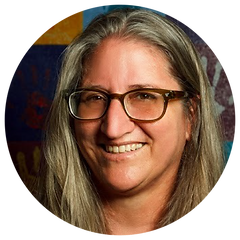
Mary Scholl deeply values presence, learning, empathy, creativity, and curiosity and is founder and fellow of the Institute for Collaborative Learning in Costa Rica. She has been teaching language for 30 years, designing and implementing educational projects in Latin America for over 18 years and served as an English language specialist for 16 years in 9 countries. A teacher-trainer and trainer of trainers, Mary is also a certified practitioner and facilitator at the Centre for Holding Space and holds a certification in teaching mindfulness meditation from Greater Good Science Center and The Awareness Training Institute at the University of California at Berkeley. She holds an MA in Teaching English and Spanish from SIT Graduate Institute and has done doctoral studies in Adult Learning and Leadership at Teacher’s College at Columbia University. She has lived and/or taught on four continents and currently enjoys working virtually around the world from her home in rural Costa Rica, in addition to face-to-face work wherever she is invited! She is a frequent presenter at local, national and international conferences In 2021, she was named as one of the top 30 English Language Specialists by the U.S. Department of State in recognition of her lasting impact on the Specialist Program and on the field of TESOL.